Human Impact: Blue Mountains
Story
Wildlife conservation groups are struggling with a lack of funding and support.
This limits their ability to protect habitats, restore damaged environments, and care for native wildlife. As environmental pressures increase, their work becomes more urgent but harder to keep up with.
Film
Human Impact: Blue Mountains is a cinematic environmental documentary exploring how human activity has impacted the Blue Mountains environment over time. The film will examine the effects of early mining, modern day tourism, infrastructure, littering, and land use on the natural environment, while also showing how our local wildlife is being impacted.
Through cinematic visuals, drone cinematography, historical references, observational footage, and real locations across the Blue Mountains, the documentary aims to create both awareness and emotional connection to the environment. Alongside the environmental challenges, the film will also highlight the importance of conservation efforts, community involvement, and responsible interaction with the bushland.
This project is only possible with the donations from sponsors and crowd funding.
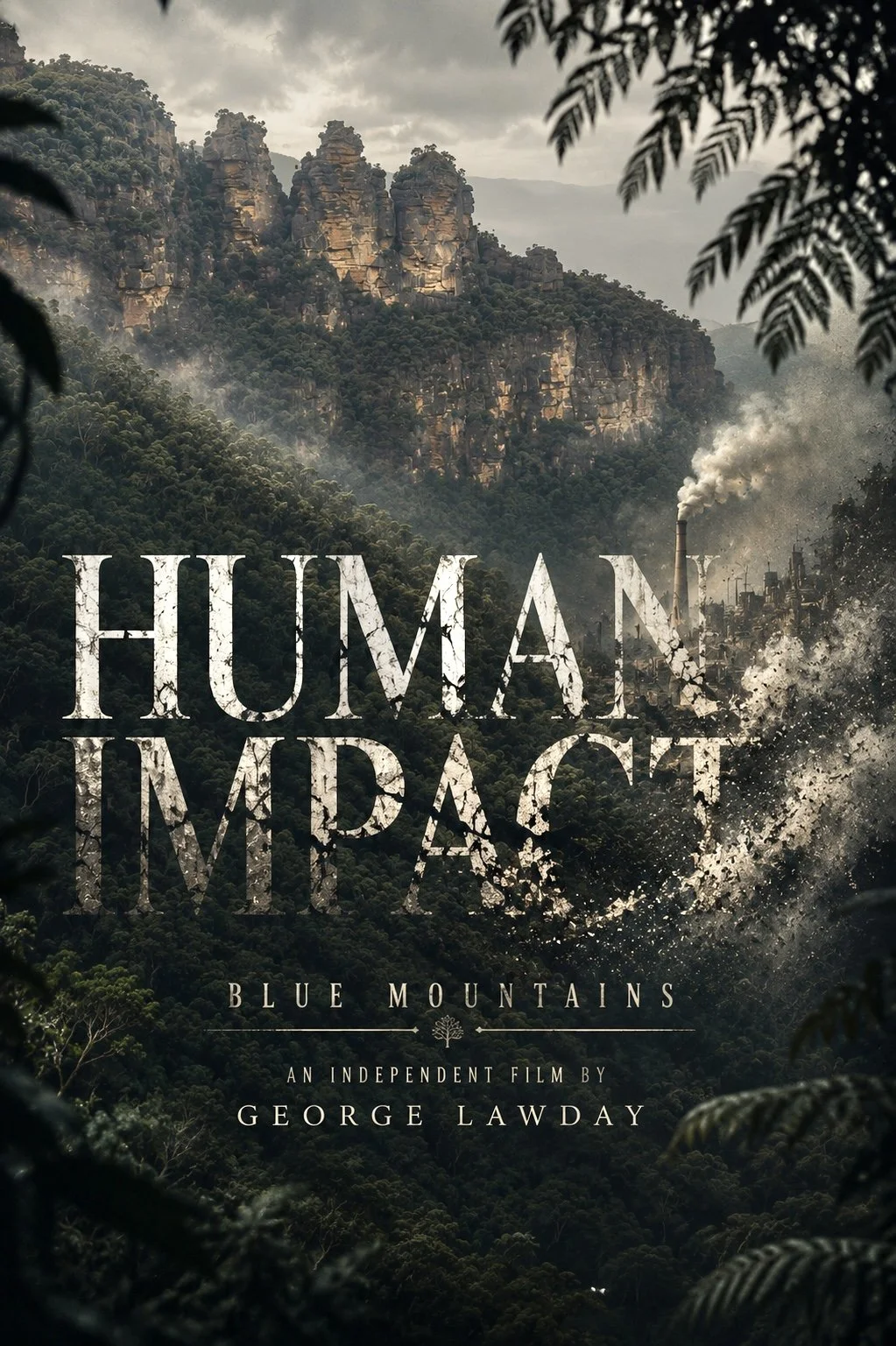
While conservation groups continue working to protect the Blue Mountains environment and native wildlife, many rely heavily on volunteers, community donations, fundraising, and limited government grants to continue operating. The Blue Mountains is one of Australia’s most visited natural regions, attracting millions of visitors over time while also facing increasing environmental pressure from tourism, track erosion, littering, invasive species, urban development, polluted waterways, and bushfire recovery. These issues create a large and ongoing demand for environmental protection and restoration work across the region.
Conservation groups and volunteers play a major role in habitat restoration, wildlife protection, rubbish removal, environmental education, weed control, bush regeneration, and monitoring ecosystem health. However, the scale of environmental pressure often exceeds the resources available. Many projects rely on inconsistent funding, volunteer availability, and short-term grants, making it difficult to maintain long-term restoration and protection efforts across all impacted areas.
Without stronger financial support and community involvement, many natural areas may not receive the level of care and restoration required to properly recover over the next decade. Reduced funding can slow habitat regeneration, decrease wildlife protection efforts, limit clean-up programs, reduce environmental research and monitoring, and weaken public education and awareness around conservation. Over time, this can contribute to declining ecosystem health, greater environmental damage, and increased pressure on already fragile landscapes and native wildlife populations throughout the Blue Mountains region.